
Better Exhaust Sound Without Guesswork
A useful sound upgrade balances tone, volume, cabin drone, emissions equipment and actual day-to-day usability.
Pocket Performance is an independent affiliate discovery service. We may earn a commission if you buy through a retailer link at no additional cost to you. Product fitment and seller terms must be checked at the retailer.
A useful sound upgrade balances tone, volume, cabin drone, emissions equipment and actual day-to-day usability.
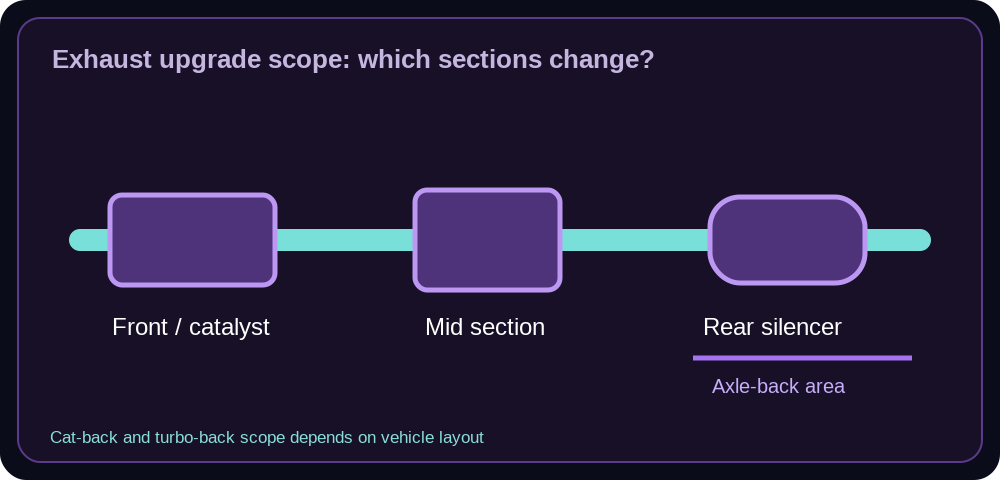
Decision points at a glance
Compare the practical differences below, then use the detailed sections and supplier information to confirm the correct component for your car.
| System | Common area changed | Trade-off |
|---|---|---|
| Axle-back | Rear silencer / tips | May alter tone more than upstream restriction |
| Cat-back | Downstream pipes and silencers | Drone, fit, mounting and noise limits |
| Turbo-back | Potentially includes turbo/downpipe area | Emissions equipment and legal constraints |
Where an exhaust system changes sound
The rear silencer, resonator and mid-pipe sections shape different frequencies. An axle-back can change the rear exhaust note, whereas a cat-back changes more of the downstream system. Turbo-back terminology varies by platform and may involve road-use emissions equipment.
The downside of chasing maximum volume
Cabin resonance at a constant motorway engine speed is often more intrusive than a short acceleration clip suggests. Valved systems offer flexibility only when the valve, electronics and controls are correctly integrated.
Material, mounting rubbers, leaks, heat shields and engine configuration can change the perceived result. Sound videos are helpful context, not objective decibel or drone tests.
Roadworthy decisions
Check relevant exhaust noise, catalytic-converter and emissions requirements under current UK guidance. Track-only labelling is not a road-use approval. Avoid modifications that remove required emissions-control equipment.
Choose your next step
Make the decision in the right order: identify your exact car and use case, compare the component types, check the seller application, then review current supplier terms. Pocket Performance does not certify any individual listing as a guaranteed vehicle fit.
What to listen for before buying
Listen for idle, light-throttle cruise, steady motorway engine speed and full-load acceleration separately. A setup can sound dramatic at full throttle while creating exhausting low-frequency resonance at 2,000–3,000 rpm in the cabin; the exact engine speed varies by drivetrain and gearing. Ask suppliers about resonator options and whether the demonstrated clip uses the same engine, exhaust configuration and recording location.
An exhaust that touches the rear axle, crossmember or heat shielding can create vibrations mistaken for normal aftermarket sound. Correct hanger positions, thermal clearance, valve-control compatibility and leak-free joints all matter. Double-check changes to the catalytic converter, particulate filter or oxygen-sensor layout before making a road-use decision.
Noise regulations, emissions inspection and insurance notification can matter even when a product physically bolts on. Compare material grade, corrosion protection, replacement parts and warranty terms alongside sound. For UK road use, consult current official MOT guidance; a seller’s “track-only” description is not equivalent to permission for public-road operation.
Technical references
Use the original manufacturer or official guidance below to verify specifications and legal requirements for your exact vehicle and intended use.