
Daily Driver Handling Without the Harsh Ride
Handling is the interaction of tyres, springs, dampers, geometry and compliance—not simply how low a car sits.
Pocket Performance is an independent affiliate discovery service. We may earn a commission if you buy through a retailer link at no additional cost to you. Product fitment and seller terms must be checked at the retailer.
Handling is the interaction of tyres, springs, dampers, geometry and compliance—not simply how low a car sits.
Decision points at a glance
Compare the practical differences below, then use the detailed sections and supplier information to confirm the correct component for your car.
| Option | Often useful when | Check before buying |
|---|---|---|
| Quality tyres / alignment | Car wanders or lacks consistent grip | Correct size, condition and geometry |
| Matched dampers and springs | Dampers are tired or body motion uncontrolled | Travel, bump stops, road comfort |
| Adjustable coilovers | You have a specific setup requirement | Adjustment limits and maintenance |
Start with what touches the road
Matching tyre type, condition and pressure to your journeys often changes steering consistency more usefully than fitting extremely hard springs. Check bushes, ball joints, dampers and alignment before diagnosing a vague response as a factory design flaw.
Suspension options by real-world compromise
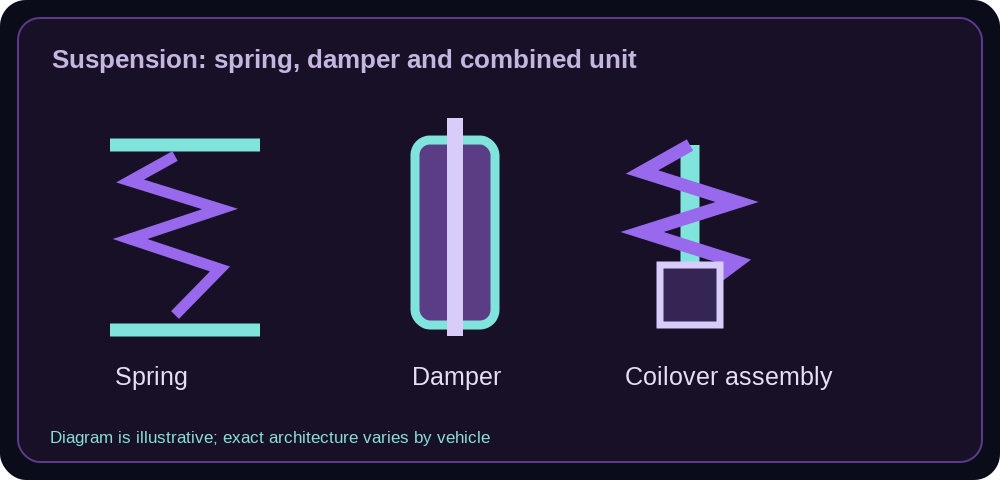
Lowering springs can reduce ride height but must work with the damper’s available travel. Matched damper-and-spring kits balance those components, while coilovers provide adjustment that requires careful calibration.
The stiffest setup may tramline or skip across broken roads. Consider wet-road compliance, speed bumps, road noise and passenger comfort alongside steering response.
A sensible upgrade sequence
Inspect → tyres → alignment → replace worn components → choose spring/damper strategy → re-check clearance and geometry. Change one variable at a time where possible, noting whether the benefit is genuine or simply a firmer sensation.
Choose your next step
Make the decision in the right order: identify your exact car and use case, compare the component types, check the seller application, then review current supplier terms. Pocket Performance does not certify any individual listing as a guaranteed vehicle fit.
How to identify the change you actually want
Describe the symptom before shopping: delayed steering response, body roll, harsh impacts, tramlining, wheel hop or uneven tyre wear do not all point to the same component. A worn damper may create repeated oscillation; a wheel-alignment problem may create an off-centre steering wheel; a low-profile tyre can change impact harshness independently of suspension spring rate.
For a daily car, consider the roads you actually drive. A moderate matched spring-and-damper upgrade may provide more consistent control than an aggressively low setup that repeatedly reaches its bump stops. Bush material, top mounts and wheel/tyre choice also affect transmitted road noise and vibration. Comfort is not a failure of a performance build; it is part of the objective.
After any suspension change, get alignment checked against an appropriate specification and observe tyre wear over time. If you have adjustable damping, write down the starting position and change settings gradually. Comparing two setups on different tyres or wildly different pressures can conceal the effect you are trying to measure.