
Track Day Preparation: Reliability Before Power
A practical preparation sequence for drivers who want their cars to remain consistent, safe and enjoyable over repeated sessions.
Pocket Performance is an independent affiliate discovery service. We may earn a commission if you buy through a retailer link at no additional cost to you. Product fitment and seller terms must be checked at the retailer.
A practical preparation sequence for drivers who want their cars to remain consistent, safe and enjoyable over repeated sessions.
Decision points at a glance
Compare the practical differences below, then use the detailed sections and supplier information to confirm the correct component for your car.
| Priority | Practical check | Why it comes first |
|---|---|---|
| 1 — Condition | Leaks, tyres, brakes, fasteners, steering | Mechanical failure cannot be solved by power |
| 2 — Heat | Brake fluid, cooling and repeatability | Sustained load differs from a short pull |
| 3 — Setup | Tyre pressures, alignment, damper health | Stable behaviour improves driver confidence |
Begin with inspection, fluid condition and tyres
Before any upgrade, inspect tyres for age, damage, pressure and suitable load/speed rating; check wheel fasteners, brake condition, fluid leaks, steering play and cooling-system health. A missed mechanical issue cannot be fixed by a more expensive modification.
Track organisers can impose noise limits, helmet rules, recovery-eye requirements and vehicle condition checks. Verify the particular circuit’s current instructions and your insurer’s track-use terms before attending.
Brakes and heat capacity
Repeated stops build heat. Appropriate pad temperature range, brake fluid condition, disc integrity and cooling can matter more than headline caliper size. Road-only tyres may be the actual grip limit; an aggressive pad can create noise and cold-performance compromises.
Observe pad wear, pedal feel and fluid temperature behaviour between sessions. A soft pedal, cracking disc or unusual vibration should trigger inspection, not another hot lap.
Suspension, alignment and repeatability
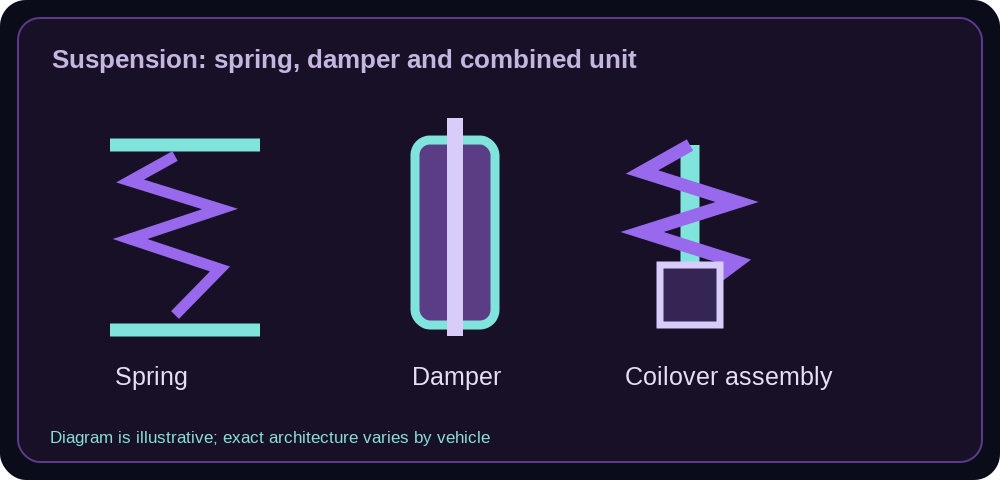
Good handling starts with tyres, healthy dampers, suitable geometry and predictable balance. Adjustable suspension is only useful when setup changes are documented and tested, not guessed.
Intercooler and oil/coolant management become relevant for prolonged high-load use, especially on turbocharged cars, but airflow obstruction and pressure losses must be considered.
Use Pocket Performance thoughtfully
Compare acceleration results only in safe, appropriate settings and with consistent vehicle load, tyre condition and weather. Never attempt timed top-speed or road racing runs on public roads.
The PP apps complement maintenance logs and track-day preparation; they do not replace circuit timing equipment or mechanical inspection.
Choose your next step
Make the decision in the right order: identify your exact car and use case, compare the component types, check the seller application, then review current supplier terms. Pocket Performance does not certify any individual listing as a guaranteed vehicle fit.
The week-before, morning-of and between-session routine
In the week before an event, deal with warning lights, leaks, unusual tyre wear and overdue servicing. Confirm that the battery is secured, wheel fasteners and suspension joints are sound, the cooling fans work, and the brake system has appropriate pads and fluid. Investigate any existing steering or braking vibration rather than treating the event as a test of whether the fault is serious.
On the morning of the event, follow the organiser’s requirements for briefing, clothing, helmet, towing points and cabin objects. Start with a conservative session to learn the surface and observe the vehicle’s behaviour, not to pursue a maximum-speed number. The best modification is irrelevant if the driver is distracted by an unsecured item or worsening pedal feel.
Between sessions, check tyre pressures with awareness that they change with temperature; look for tread or shoulder damage, loose trim, new fluid traces and abnormal brake symptoms. Let parts cool before handling them. Repeated heat problems suggest a need for diagnosis and a measured upgrade plan, not immediately a larger turbo or a race pad for road use.
Technical references
Use the original manufacturer or official guidance below to verify specifications and legal requirements for your exact vehicle and intended use.